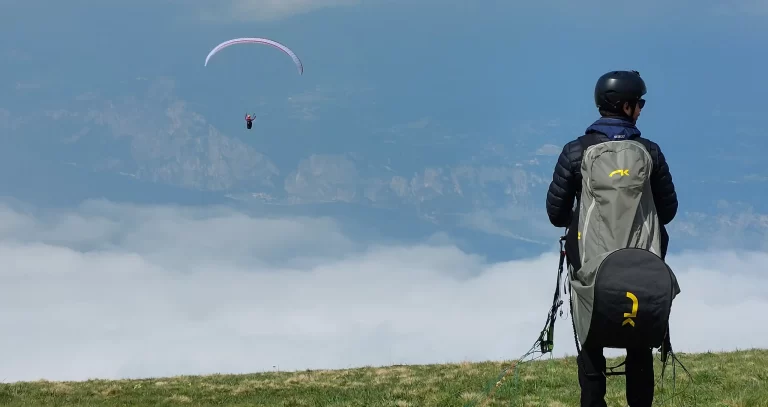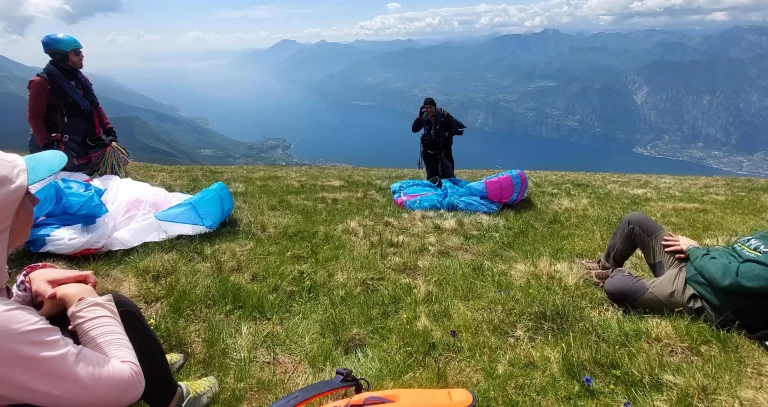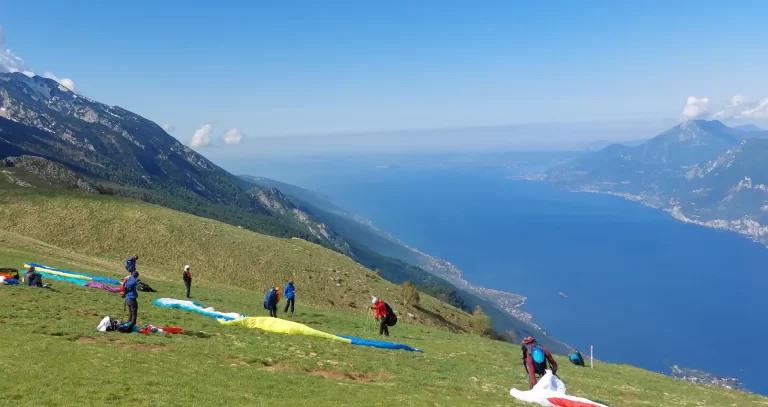

SIV stands for Simulation d’Incident en Vol — French for “simulation of in-flight incidents.” It’s the over-water, instructor-guided training where paraglider pilots deliberately fly into collapses, stalls, and spirals so they learn to recover them on instinct.
Good question! Here’s what a typical SIV course with Flying Karlis looks like, step by step.
Day 1 – Getting Started
We start early at 7:00 AM. You’ll arrive with your gear, ready to fly. Bring an extra set of dry clothes too, just in case you end up going for a swim !
Equipment Check (1–2 hours)
- We’ll start by going through your kit to make sure everything’s safe and ready to go.
- That includes checking your harness, reserve, connections
Course Gear
We’ll also hand out a few essentials:
- Two-way radio with an earpiece
- Dry bag for electronics
- Automatically inflating 300NT life vest
Course Briefing (around 40 minutes)
Before heading up the mountain, we’ll cover:
- How to use your life vest
- Radio comms and how we’ll stay in touch during flights
- The core SIV skills
- Your first maneuver: natural exits (don’t worry, we’ll explain)
Pre-Course Knowledge Base
No need to memorize everything on the spot, we’ll have already sent you a handy knowledge base before the course, so most of it should feel familiar.
Up to Launch (around 10:00 AM
- From the landing zone, we’ll head up via cable car.
- At takeoff, our ground team helps manage launch order and safety, so you can focus on the task at hand.
- One pilot flies at a time, entering the training zone with their instructor guiding them by radio.
Flight & Debrief Cycle – After each flight:
- You’ll meet with your instructor one-on-one to debrief.
- You’ll plan your next flight together.
- When you’re ready, you’ll pack up and head back up for another round.
- We aim for up to three flights per day, each followed by personal feedback.
End of Day Video Review
We end up with a short group video debrief to look back on key learning moments and share insights from everyone’s flights.
Day 2 – Progression Day
We meet a little later (around 8:00–9:00 AM, depending on the weather).
Again, we aim for up to three flights, refining maneuvers and dialing in confidence.
You’ll get a personal flight plan for the day, and we’ll keep building on what you learned.
Day 3 – Backup & Wrap-Up
This day gives us a buffer for weather. If conditions are flyable, we’ll squeeze in another one or two flights.
Then, we end up with:
- A full video and performance review
- A personal progression plan so you leave knowing what to work on next
By the end of the clinic, you’ll not only know how to deal with unexpected situations, you’ll understand your wing way better and feel a whole lot more in control.