UPDATE, July 2026: the Black Box now streams to the world. Read what changed.
Flying Karlis Events in cooperation with Camping de Monteglin and Chabre Club has organized five international paragliding events so far. Over time, our team has learned the ins and outs of organizing, managing and logging our events.
While we successfully record nearly every aspect of operations, one gap has alway bothered me: the inability to capture radio communications. All other channles are covered: team discussion on Telegram or WhatsApp are automatically logged, and pilot flights are tracked using our Tracker fleet as well as a secondery tracking via Pure Track. The only missing piece has been the actual in fllight radio exchanges between pilots and the team.
Black Box isn’t a new concept in aviation, every commercial plane has one.

Lately, I’ve been grounded for about three months due to a frozen shoulder. With all that extra time on my hands, I decided to address a question that had been bugging me for a while: how could I make a black box for paragliding ?
My mindset was simple : how hard can it be ?
Radio Communication in Paragliding Competitions
Before diving into the “black box” idea, let me quickly explain how our current radio setup works during competitions. We use a repeater so we can reliably reach pilots across our entire taskable area-specifically, a cross-band repeater.
As you probably know, handheld radios have limited range, especially in the terrain we fly in. A repeater, as the name suggests, is another radio (usually positioned high up, that receives your transmission, amplifies it, and retransmits it over a greater distance).
A cross-band repeater is a variation on this principle. Instead of receiving and transmitting on the same frequency band, it receives on one band (for example, VHF) and transmits on another (for example, UHF). The key advantage is flexibility, you can change frequencies just like you would on a handheld radio.
By contrast, a standard repeater receives and transmits on the same frequency and is usually built for a single, fixed frequency. That’s fine if you always operate in the same location, but not ideal for competitions where frequencies may need to change depending on where we are.

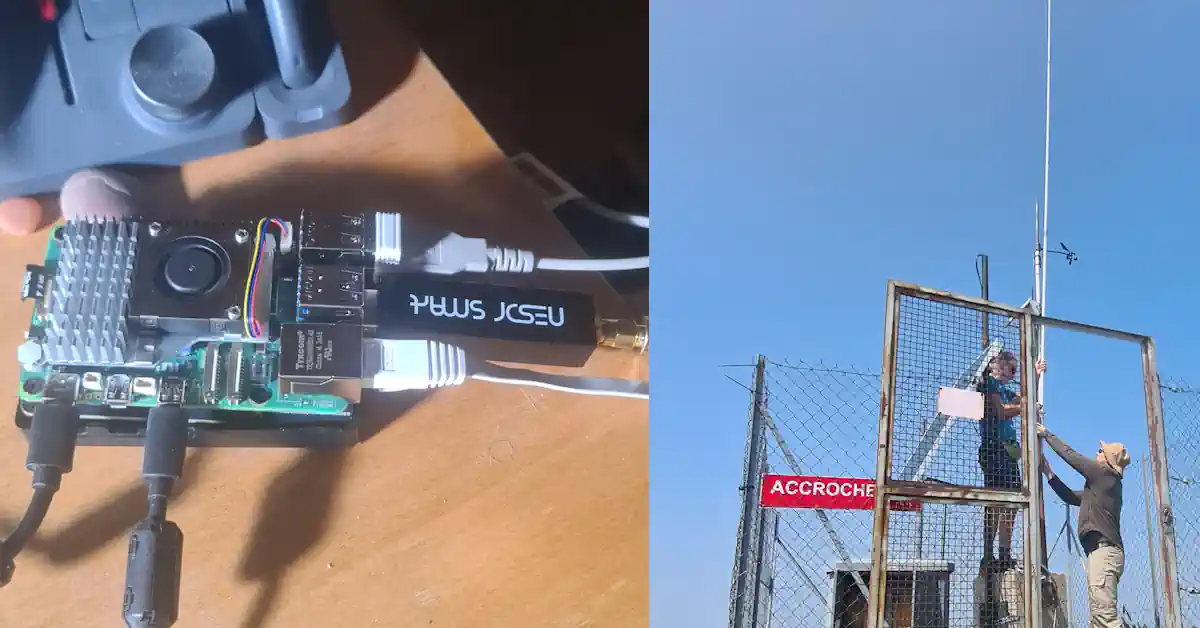
For our purposes, we’ve set up cross band repeaters on top of a 1360 m mountain, with 5.7 m antennas. At HQ, we have another 50 W radio connected to its own 5.7m antenna, allowing us to communicate directly with pilots.
This setup provide excellent coverage, over a 50 km radius for air-to-air communications. The black box itself is positioned about 20 km from the repeater, in clear line of sight, at an elevation of 860m.
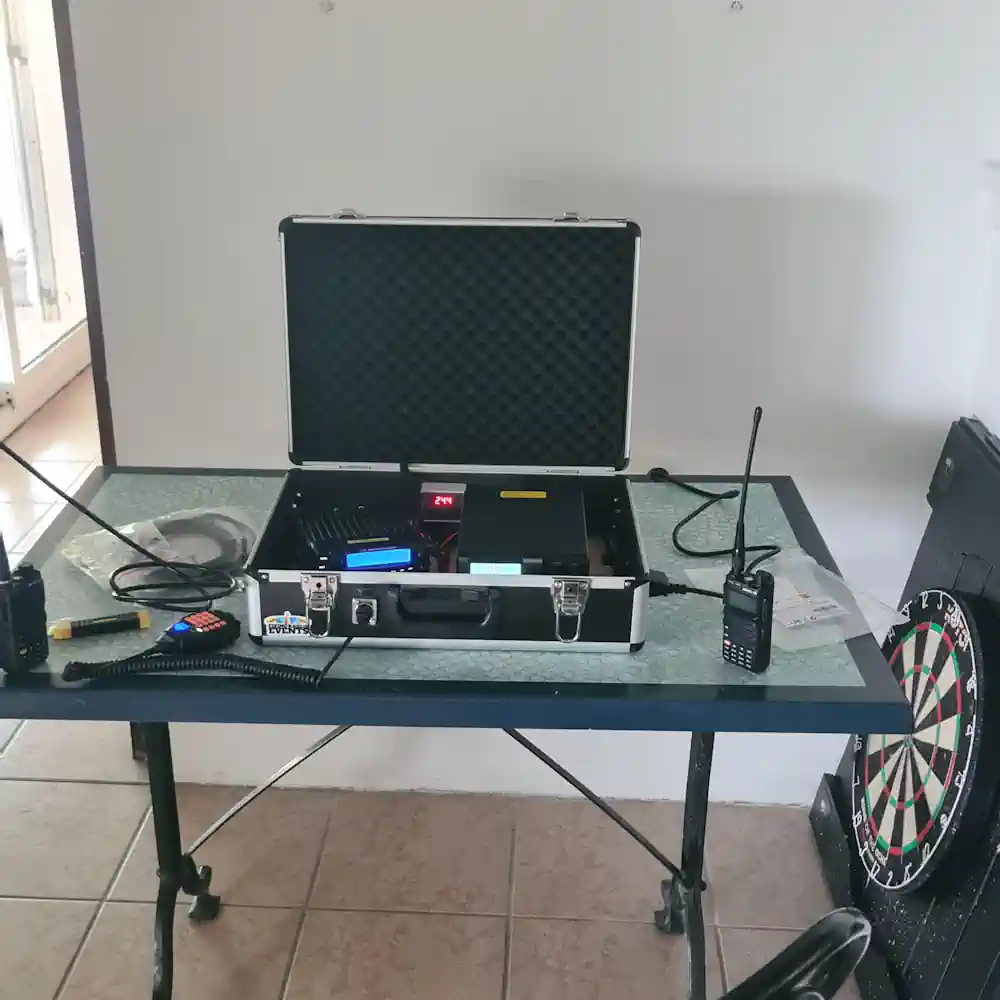
This setup, strong radios on the mountaintop and at HQ, has worked great for our competitions. The next challenge was building the black box itself.
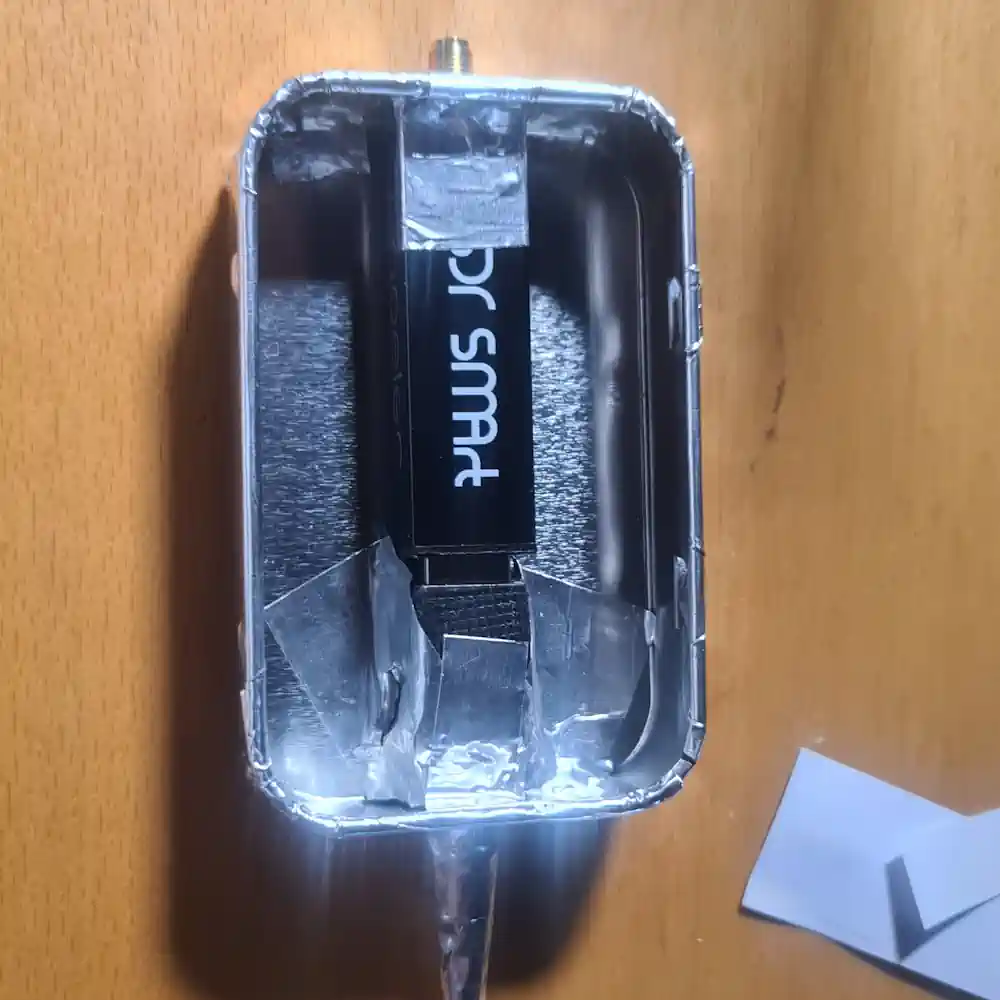
After several days of research, I settled on a simple yet powerful solution: a Raspberry Pi 5 paired with two USB radio dongles, allowing it to listen to both UHF and VHF frequencies. I had to make a few imporvised hardware tweaks to reduce interference and keep the signal clean. The rest of the process was focused on configuring the software and ensuring the sytem could run indepently.
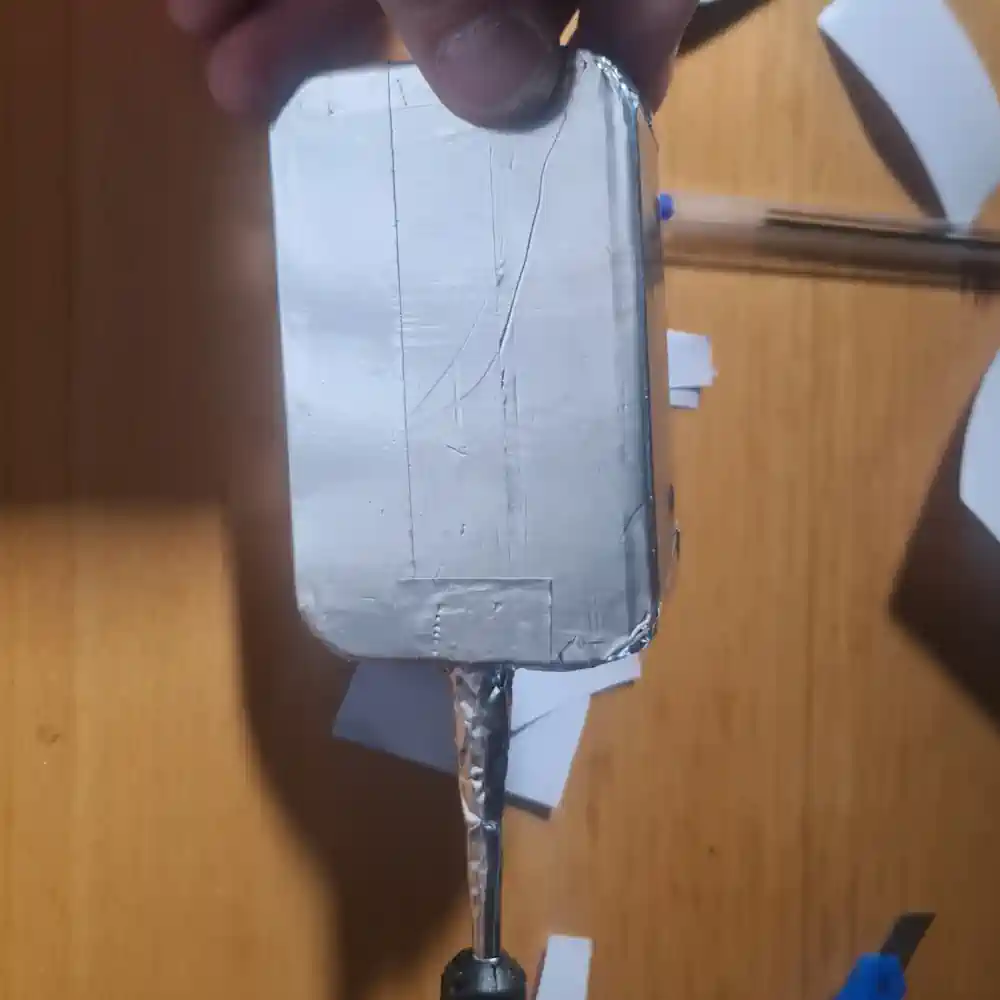
Building the black box purely for recording wasn’t actually that difficult: a Linux based sytem with dedicated software can be configured to listen, record, timestamp, and archive all incoming transmissions.
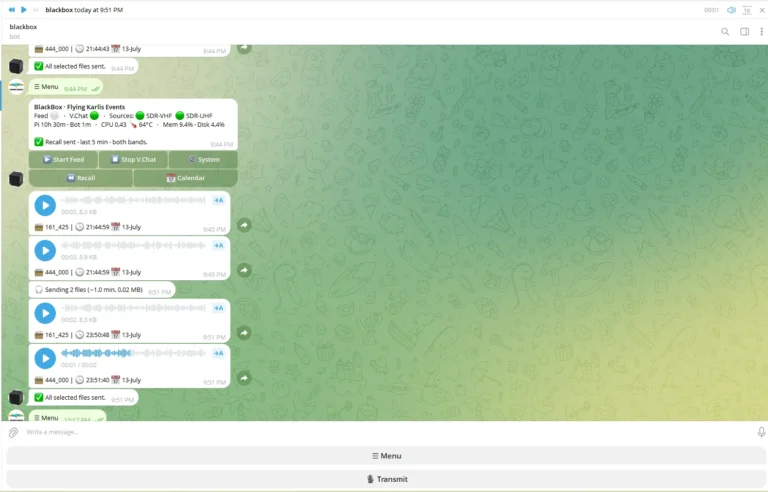
I decided to take it a bit further by creating a Telegram bot. Now, instead of physically accessing the device to listen, we can request any transmission from any time period directly from our phones. I even built a public-access feature so friends and family could listen in while their loved ones were competing.
Since I’m not a professional programmer (I learned what I needed just for this project), I was a bit worried about bottlenecks in my bot code. To avoid overloading the system during events, I disabled public access and limited usage to our team. After all, it’s running on our home internet connection and a single Raspberry Pi, it’s not exactly built for handling 100+ simultaneous requests.
This part of the project is still a work in progress. My next step is to offload the distribution from our home network to dedicated servers that can handle more traffic.
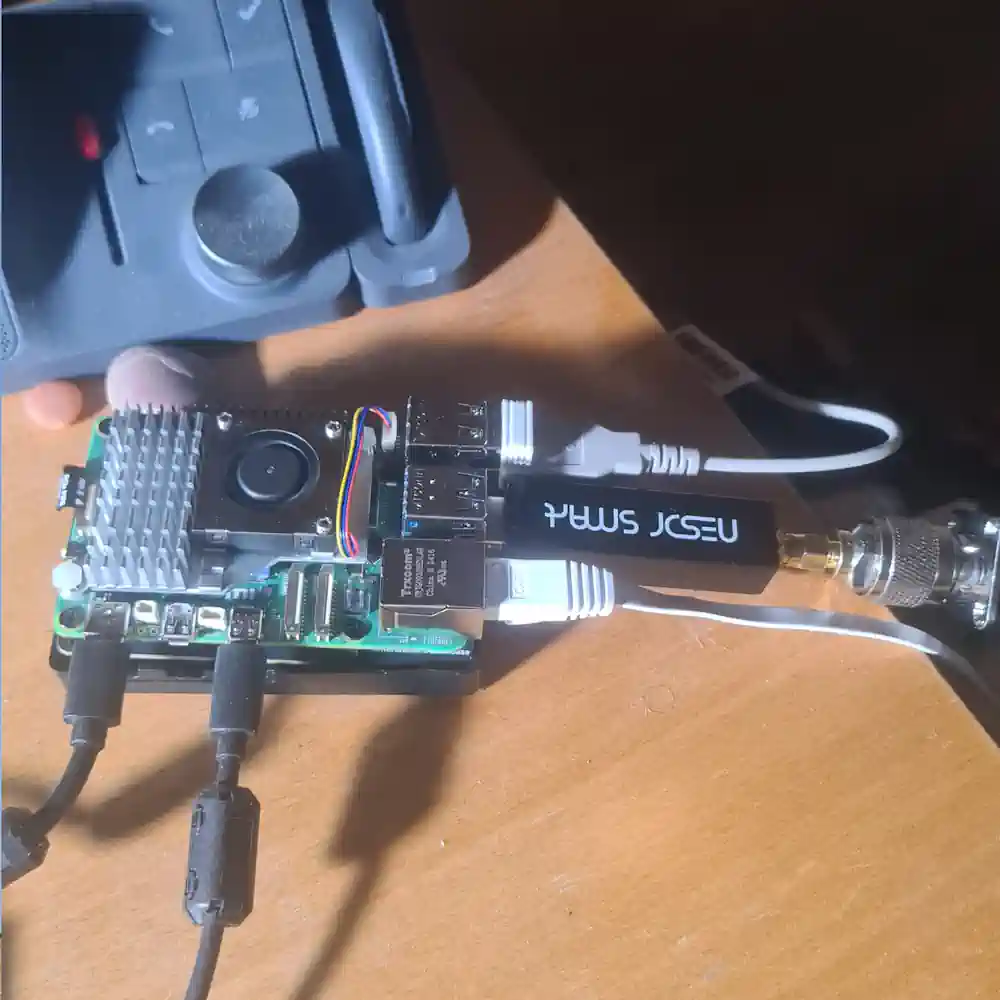
The Black Box was used for the first time during the 6th BGD Weightless and it performed very well, doing exactly what it was designed to do.
Since then, I’ve partnered with experienced programmers to tackle the distribution challenge. The goal is to eventually make the system public so anyone can listen in during the events we run.
Here are a few sample audio recordings, During these, we were in Montclar, about 50 km in straight line from Chabre, and roughly 70 km from the Black Box itself :
You can download the full radio check here.
Telegram Bot – flyingkarlisbot
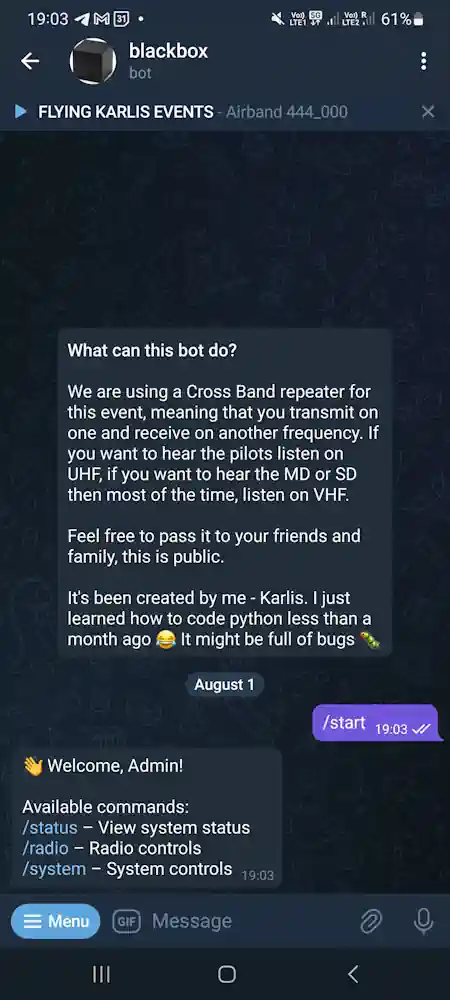
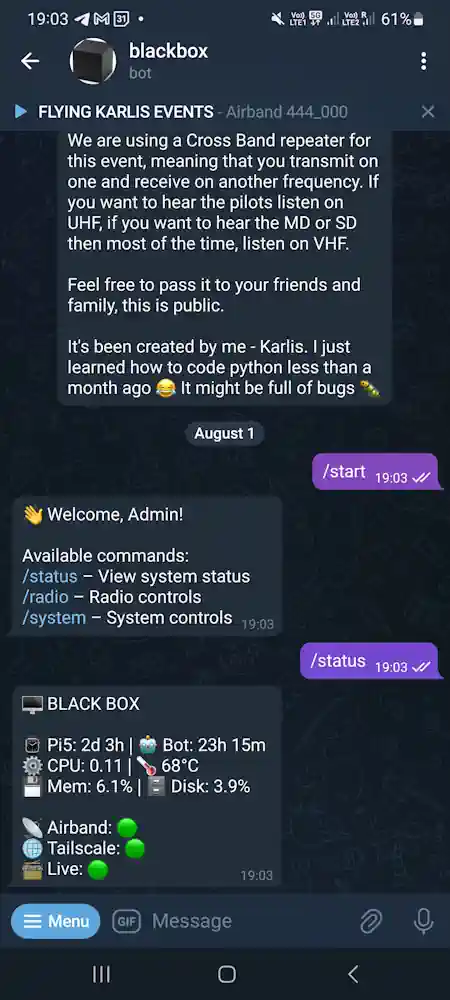
The current version of the Black Box can listen to live audio as it comes in, with a delay of just under five seconds. It can also retrieve the last 5,10, 30, or 60 minute of transmissions. Additionally, you can browse through a calendar, pick a specific date, set a start and end time, and request all transmissions from that period.
These recording can be sent directly to your phone via the bot, either as individual audio files or bundled in a ZIP. There’s also an option to upload them to Google Drive and generate a shareable link (useful if we need to send audio to third parties) All of these feature are available to power users, which in our case means our organizational team.
For future public access (once the bottleneck issues are solved), users will be able to toggle the feature on or off and receive alerts whenever new audio is being transmitted. Of course, the admin setup includes more controls, including a “Public Listening OFF” button, which we reserve the right to use whenever necessary.
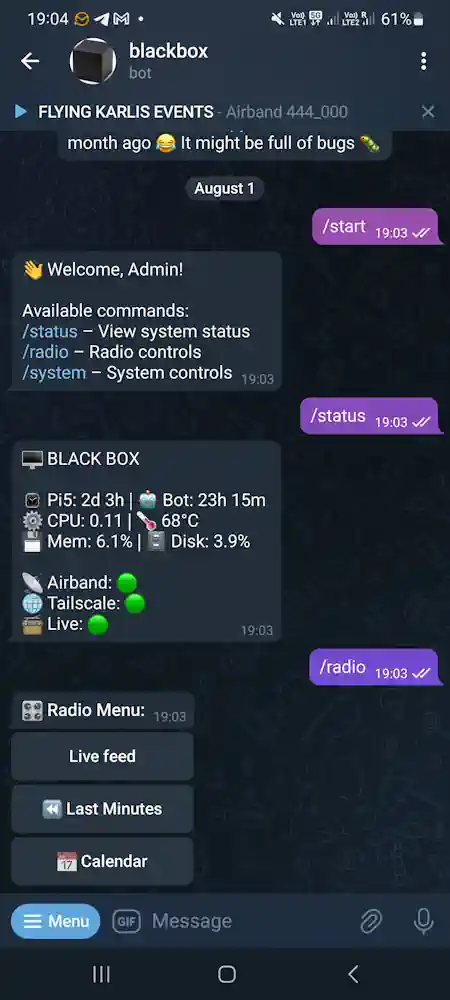
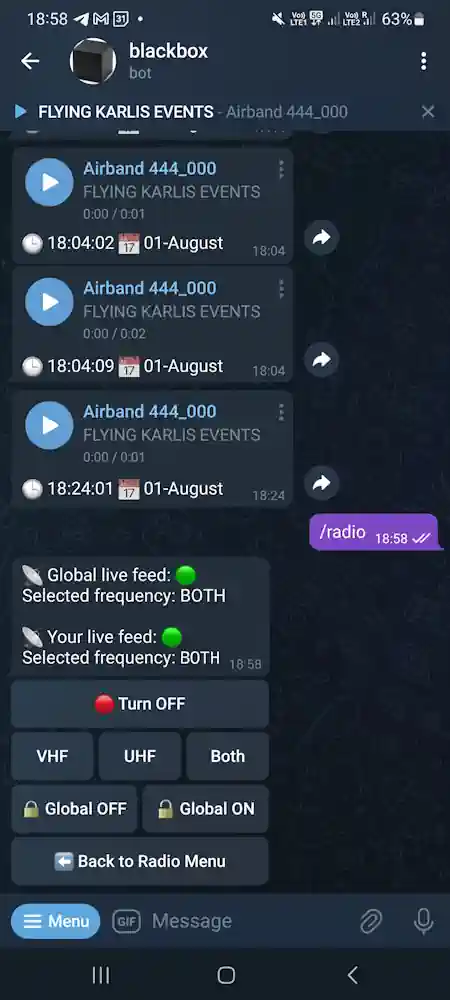
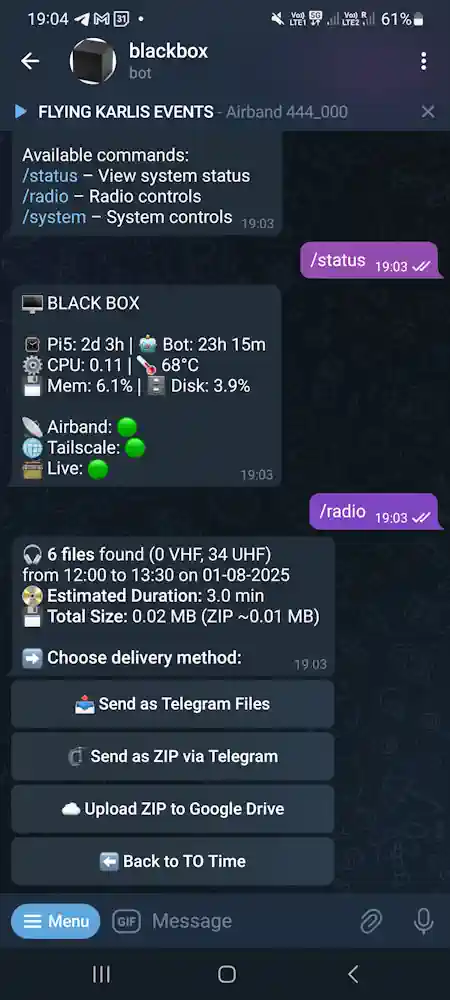
This is still very much a work in progress, and we already have ideas to make it even more useful for future events.
While developing this project, I realized there’s potential to improve safety, reliability, and even eliminate the infamous PPT (Push to Talk) issues that sometimes occur in competitions. On top of that, the Black Box could provide a dependable secondary tracking method (especially if integrated with live tracking providers).
To make that happen, we’ll need to move from analog radios to digital. The technology already exists and is available off the shelf. All we need is some programming magic and a bit of funding. I truly believe paragliding competition safety can be taken to a level never seen before, and I can’t wait to bring these ideas to life in the near future.